
 Jacksonville, FL
 Call (904) 337-4000


Orlando runs on volume. The city supports millions of visitors, thousands of businesses, and one of the fastest‑growing job markets in the country. That scale creates pressure. Systems must work every hour. Staff must stay productive. Technology must stay predictable.
Orlando welcomed 75.3 million visitors in 2024, marking the highest visitor volume in the city’s history. That level of activity stresses networks, applications, and internal teams daily. Growth creates opportunity, but it also exposes weak infrastructure quickly.
The most common strains on Orlando’s technology backbone include:
-
Network Overload: High traffic volumes test bandwidth and reliability.
-
Application Stress: Platforms must scale to handle spikes in transactions.
-
Team Capacity Limits: Internal IT staff face mounting demands without pause.
-
Infrastructure Weakness: Outdated systems collapse under rapid growth.
As Philipp Graves, CEO, Antisyn, says, “Reliable systems decide whether growth compounds or collapses under its own weight.” This reality explains why Orlando industries now treat IT stability as core infrastructure.
Build IT Systems That Keep Pace With Orlando’s Growth
Expansion adds pressure fast. Align your infrastructure with how your business actually operates.
Orlando Industries Fueling the Local Economy
Orlando is no longer a single‑industry city. Tourism still leads, but it does not stand alone. Healthcare systems, aerospace operations, logistics networks, and technology firms now shape daily economic activity.
Tourism remains the largest engine. Central Florida tourism generated $94.5 billion in economic impact and supported over 468,000 jobs in 2024. Those numbers show scale, not dependency. Each visitor triggers data flows across ticketing, lodging, healthcare access, transportation, and payment systems.
Other pillars of Orlando’s economy include:
-
Healthcare: Large hospital networks and research institutions operate around the clock, requiring constant system availability.
-
Aviation and Aerospace: Simulation, training, and manufacturing rely on secure networks and controlled environments.
-
Technology and Digital Media: Software, modeling, and interactive media companies drive one of the fastest‑growing tech workforces in the country.
-
Logistics and Distribution: Supply chains depend on visibility and coordination across regional and global networks.
Each sector depends on stable systems to function on the city’s scale. Growth creates opportunity, but it also exposes weak infrastructure quickly, making IT maturity a requirement rather than an option.
The Biggest Industries in Orlando, Florida and Their Technology Demands
Every major sector in Orlando uses technology differently. Each still shares the same operational truth: systems must stay available, data must move cleanly, and people must work without interruption.
Technology demands across industries include:
-
Hospitality and Tourism: Reservation systems, access controls, guest Wi‑Fi, and point‑of‑sale platforms must stay online during peak volume.
-
Healthcare and Life Sciences: Electronic records, imaging systems, and secure communications support patient care; latency slows treatment, and outages delay decisions.
-
Aviation and Aerospace: Simulation platforms, design systems, and production networks demand consistency and strict access management.
-
Information Technology and Digital Media: Development teams rely on cloud platforms, secure collaboration tools, and stable networks to meet deadlines.
-
Manufacturing and Distribution: Scheduling systems, inventory visibility, and logistics coordination must remain uninterrupted to prevent cascading supply chain disruptions.
These pressures define the biggest industries in Orlando and explain why operational IT now sits at the center of daily business execution. Reliable systems are the backbone of economic growth.
Top Industries in Orlando and Why Downtime Hits Hard
Downtime no longer causes minor inconvenience. It creates immediate business impact. Revenue stops. Staff wait. Customers feel the delay.
The industries most affected by downtime include:
-
Tourism: Lost bookings and stalled reservation systems directly cut into revenue.
-
Healthcare: Patient intake, diagnostics, and treatment workflows slow or halt.
-
Manufacturing: Production hours vanish when systems stall, delaying output. Manufacturers face an average of $255 million in losses each year due to downtime.
-
Technology Firms: Delivery windows slip, damaging client trust and project timelines.
Staffing compounds the issue. Mid‑sized organizations struggle to hire experienced internal IT teams. Skilled engineers remain scarce, and workloads keep rising.
Complexity adds pressure as cloud platforms, remote access, compliance needs, and layered tools increase failure points. Systems age faster than teams can refresh them.
This reality defines the top industries in Orlando and explains why operational resilience now outweighs flashy innovation.
Orlando Top Industries and the Shift Toward Managed Services
Internal IT teams face limits. Headcount caps restrict coverage, on‑call rotations burn teams out, and recruiting certified talent costs more each year.
Managed services emerged as a structural response, offering:
-
Extended Capability: Expanding IT coverage without endlessly growing payroll.
-
Process Discipline: Defined workflows replace improvised fixes.
-
Continuous Monitoring: Issues surface early, reducing disruption.
-
Predictable Response: Coverage stays consistent across systems and time zones.
This shift supports Orlando’s top industries that need stability without expanding internal complexity further. Managed services provide structure, accountability, and resilience, allowing businesses to focus on growth instead of firefighting IT problems.
|
More articles you might like: |
Industries in Orlando and the Role of Proactive IT Management
Reactive IT no longer works at city scale. Waiting for failures costs time and trust. Proactive management changes the equation.
Proactive IT management delivers value through:
-
Continuous Monitoring: Identifying issues early before they disrupt operations.
-
Preventive Maintenance: Reducing system strain and extending hardware life.
-
Reliable Backups: Protecting continuity when failures occur.
-
Strategic Planning: Removing surprise costs with forward visibility.
Predictability matters more than speed alone. Leaders need visibility into system health and future needs, while teams need fewer disruptions during peak demand. Process drives outcomes often seen in clear workflows, documented standards, and scheduled reviews. These disciplines support industries in Orlando that operate under constant demand.
Orlando Industries and Cyber Risk Reduction Through Process
Threats target people first. 25% of employees have clicked a phishing email while on the job. Email remains the primary entry point, and weak access controls widen exposure.
Practical steps to reduce cyber risk include:
-
Layered Controls: Firewalls, endpoint protection, and multifactor authentication.
-
Employee Training: Improving awareness to stop phishing and social engineering.
-
Access Policies: Limiting exposure by restricting unnecessary permissions.
-
Active Monitoring: Detecting abnormal activity earlier to contain threats.
No system promises absolute protection, but the process improves resilience. Consistent reviews close gaps over time, strengthening defenses incrementally. This approach supports Orlando industries that cannot afford operational interruptions tied to preventable issues.
How Managed IT Services Support Growth Across Orlando Industries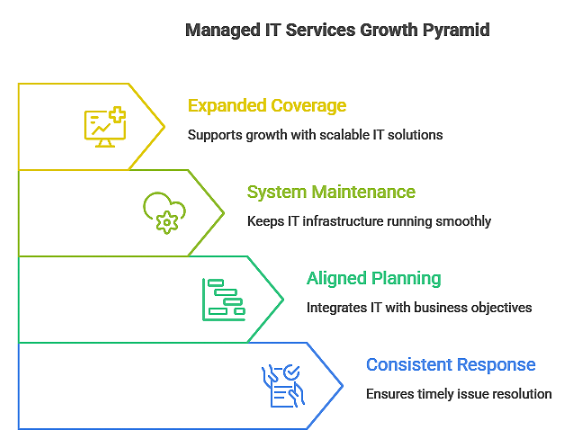
Growth strains systems before leaders notice. New hires, new locations, and new applications each add complexity.
Managed IT services support scale by providing:
-
Expanded Coverage: Extending IT support without hiring surges.
-
System Maintenance: Keeping platforms updated and reliable.
-
Aligned Planning: Ensuring IT strategy matches business direction.
-
Consistent Response Times: Delivering predictable support across all operations.
Response times improve when coverage remains consistent. Issues are resolved faster, staff productivity rebounds, and businesses maintain momentum. These outcomes matter across Orlando industries experiencing sustained growth pressure.
Why Orlando Industries Rely on Strategic IT Planning
Technology spending without planning creates waste. Short‑term fixes stack up, and budgets lose clarity.
Strategic IT planning delivers value through:
-
System‑to‑Goal Alignment: Connecting upgrades directly to business objectives.
-
Roadmap Development: Scheduling improvements alongside growth timelines.
-
Budget Predictability: Providing clarity and reducing surprise costs.
-
Executive Confidence: Offering clear options and tradeoffs without technical overload.
This discipline supports Orlando industries that value stability while scaling operations. Strategic planning ensures technology investments compound growth rather than create inefficiency.
What Orlando Businesses Should Look for in a Managed IT Partner
Choosing support requires scrutiny. Capabilities matter more than claims.
The most important qualities to evaluate in a managed IT partner include:
-
Process Maturity: Documented workflows and consistent delivery that prove reliability.
-
Response Speed: Staffing depth that ensures issues are resolved quickly and predictably.
-
Certified Expertise: Specialized knowledge to support complex and regulated environments.
-
Clear Communication: Transparent updates that build trust and reduce confusion.
-
Local Understanding: Regional knowledge that grounds decisions in Orlando’s business reality.
These criteria matter across industries in Orlando operating under real‑world constraints. A strong managed IT partner provides structure, accountability, and resilience, helping businesses scale without sacrificing stability.
Operational Signals Business Leaders Monitor but Rarely Track
Businesses monitor revenue closely. Fewer track infrastructure signals that predict disruption. These metrics reveal risk before problems surface.
The table below highlights operational indicators leaders often overlook. Each one connects directly to system stability and workforce productivity. Awareness creates leverage before failures escalate.
|
Operational Indicator |
What It Reveals |
Why It Matters in Orlando |
|
After-hours support volume |
Staff strain and hidden issues |
High tourism and healthcare activity extends workdays |
|
Backup recovery testing frequency |
Actual data protection readiness |
Growth increases data volume rapidly |
|
Device lifecycle age |
Future failure risk |
Budget planning prevents surprise replacements |
|
Access change turnaround time |
Security hygiene quality |
Staff turnover impacts access control |
|
Patch delay averages |
Exposure window length |
Complex systems increase vulnerability |
These signals help leaders act before disruptions affect customers or staff.
|
Trusted IT Services in Orlando |
Drive Stability with Antisyn
Orlando continues to grow. Volume increases. Complexity rises. Systems face pressure daily. Success depends on predictability, not luck.
This article explored how Orlando industries rely on stable infrastructure, proactive management, and strategic planning to sustain operations. Managed services support that structure by extending capability without inflating internal teams.
Key reasons businesses choose Antisyn include:
-
Proven Experience: 15 years of operational delivery across diverse industries.
-
Reliability Under Pressure: Systems designed to support organizations facing constant demand.
-
People‑First Service: Consistent delivery backed by a client‑focused approach.
If you want technology that supports growth without distraction, contact us today to schedule a consultation and discuss your environment with experienced IT consultants. Your systems should work as hard as your business does, and with Antisyn, they can.
